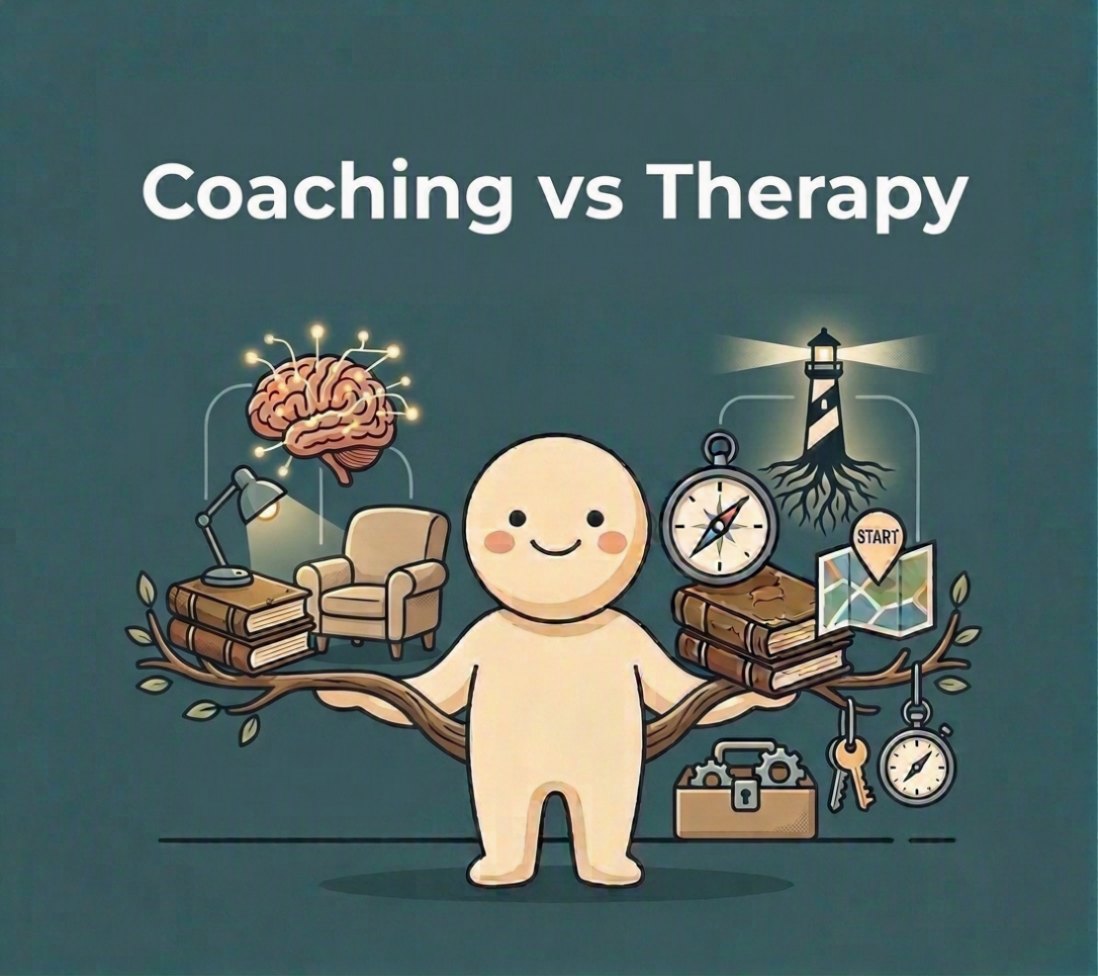
If you’re deciding between addiction recovery coaching and therapy, you’re not alone. Both can be genuinely helpful, but they’re designed to do slightly different jobs. It’s common to feel unsure about which one you actually need.
One thing I want to be clear about from the start: coaching isn’t “less than” therapy. It’s a different kind of support. For many people, especially in early recovery, or when they feel stuck, coaching can be a powerful standalone option.
I’m based in London and work online via Zoom with clients across the UK, and internationally.
Quick takeaways
- Recovery coaching is practical and structured. It focuses on what’s happening now, what’s getting in the way, and what you’ll do next.
- Therapy is often more exploratory. It can help you understand emotional patterns, relationships, mental health, and the why behind what you do.
- Coaching can be therapeutic in effect, because when you change what you do in real life, your routines, your boundaries, your coping skills, how you feel often changes too.
- Many people use both: therapy for depth and processing, coaching for structure and follow through.
A quick note on language: coaching can be therapeutic
A lot of people hear “therapy” and assume it’s the only support that can feel emotionally deep.
In reality, coaching conversations can be emotionally meaningful too. The difference is usually role and structure.
Therapy is typically framed as a clinical psychological service. Coaching is typically framed as practical, goal led support. But when you build stability, self trust, and emotional regulation through consistent action, that is often therapeutic in effect.
Quick answer (if you’re deciding today)
If you’ve already got plenty of insight, but you still keep ending up in the same loop, coaching is often the missing piece. It turns good intentions into a plan you can actually follow.
Coaching may be a good fit if you want
- A clear plan for cravings, triggers, weekends, and social situations
- Structure, accountability, and momentum
- Practical tools you can use between sessions
- Support while you’re still using, cutting down, or in early recovery
- Help turning insight into action, and building a life that feels worth protecting
If you’re leaning this way, this page can help you decide quickly: Do I need an addiction recovery coach?.
Therapy may be a good fit if you want
- Space to explore emotions, relationships, and long standing patterns
- Support with anxiety, depression, trauma symptoms, or mental health concerns
- A deeper focus on understanding what you’re experiencing, and what might be driving it
If you’re unsure, a simple way to decide is this: if you want a structured plan, and support implementing it in real life, coaching is often the fastest place to start.
What addiction recovery coaching is (in plain English)
Addiction recovery coaching is practical, structured support to help you change your relationship with alcohol, drugs, or other addictive behaviours.
A typical coaching session focuses on:
- What’s happening right now
- What’s pulling you off track
- What you want instead
- What you’ll do next: a plan you can actually follow
Coaching is especially useful when you need help with the real world friction of recovery: stress, cravings, boredom, loneliness, social pressure, sleep, routines, and boundaries.
What therapy is (and what it’s great for)
Therapy is a professional space to explore emotions, relationships, and patterns, often with more emphasis on understanding the why behind what you do.
Therapy can be particularly helpful when:
- mental health symptoms are a major driver of addictive behaviour
- past experiences are still shaping your present in painful ways
- you need a safe space to process grief, shame, anxiety, or trauma
The key differences (coaching vs therapy)
| Area | Recovery coaching | Therapy |
|---|---|---|
| Main focus | Present and future, what you’ll do next | Understanding and processing, emotions, patterns, history |
| Style | Structured, practical, goal led | Exploratory, reflective, insight led |
| Between sessions | Tools, plans, experiments, accountability | Reflection, processing, integration |
| Best for | Early recovery structure, relapse prevention, routines, triggers | Mental health concerns, trauma work, relationship patterns |
| What it can feel like | Collaborative and action oriented | Deep and exploratory |
When coaching can be enough on its own
Coaching can be a strong standalone choice if you:
- want to stop or cut down, and need a practical plan
- are in early recovery, and want structure and accountability
- are post rehab, and need help translating support into real life
- feel stable but stuck, and want direction, meaning, and routine
- already understand your story, but need help changing what happens day to day
If you’re dealing with severe trauma symptoms, active psychosis, or immediate risk of harm, therapy and or specialist services should come first.
Important note (so you’re clear on boundaries)
Coaching is not a substitute for medical care, or clinical mental health treatment. I don’t diagnose conditions, or provide psychotherapy.
That said, coaching can work brilliantly alongside therapy, psychiatry, or other support, especially when you want structure, accountability, and practical follow through.
Which should you choose? Common situations
If you’re still using or trying to cut down
You don’t need to be fully sober to get support.
Coaching can help you get clear on what you want, reduce harm, and put practical boundaries in place. Therapy can help too, especially if emotions, trauma, or mental health are driving the behaviour.
If you’re in early recovery
Early recovery often needs structure.
Coaching can be a strong fit if you want a plan for cravings, triggers, weekends, and social situations, plus weekly goals and accountability. Therapy can be a strong fit if you need space to process grief, shame, anxiety, or relationship stress.
If you are post rehab, or leaving structured support
A common challenge after rehab is going from contained support back into real life.
Coaching can help you translate what you learned into routines, boundaries, relapse prevention, and a life that feels worth protecting.
If this is where you are, you might also want to look at Your Sober Companion.
If you are stable but stuck
Sometimes the issue isn’t crisis, it’s drift.
Coaching can help you build meaning, direction, routines, and confidence. Therapy can help if what’s keeping you stuck is emotional pain, unresolved history, or relationship patterns.
Can you do both coaching and therapy?
Yes, and it’s often a powerful combination.
Therapy can help you understand and heal what’s underneath. Coaching can help you build the day to day structure that keeps recovery moving.
If you already have a therapist, coaching can also be the practical layer that turns insight into action.
What to look for in an addiction recovery coach
If you’re considering coaching, look for:
- Clear boundaries and confidentiality
- A practical approach, not vague motivation
- Evidence based tools you can use between sessions
- A style that fits you: direct, warm, non judgemental
- Relevant training and credibility
If you’re considering working with me specifically, I combine professional training, including an MSc in Occupational Therapy, with evidence based recovery tools, and lived experience of long term recovery, so the work stays practical, grounded, and real.
Frequently asked questions
Do I need to be sober before coaching?
No. Many people reach out while they’re still using, or trying to cut down. We start from wherever you are.
Is coaching confidential?
Yes. What you share stays private, with standard safeguarding exceptions where there is a serious risk of harm.
How many sessions do people usually need?
There’s no fixed number. Some people want a handful of sessions to build momentum. Others prefer ongoing support. We work at your pace.
Is online coaching effective?
For many people, yes. Online sessions can be more private, easier to schedule, and more consistent.
Is a recovery coach the same as a therapist?
Not usually. Therapy typically focuses on emotions, patterns, and mental health. Coaching typically focuses on practical change, structure, and accountability. Many people use both.
Next step
If you want support, you have two simple options:
1. Book a session if you’re ready to start.
2. Ask a question privately if you’d rather talk it through first.
If you want structure, a plan, and follow through, coaching is built for that.