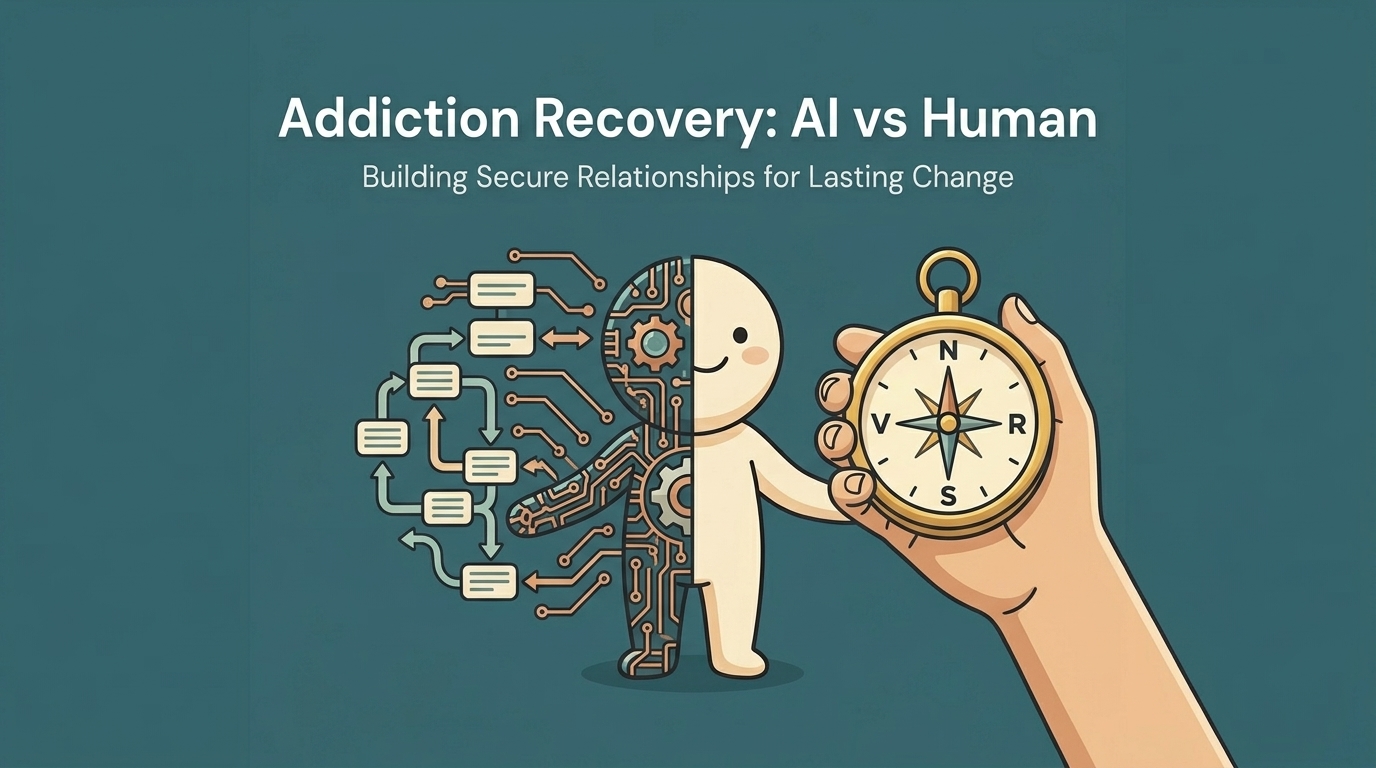
AI has been part of everyday life for a few years now, and it's increasingly showing up in mental health and addiction support too. It's available 24/7, it replies instantly, and it can feel easier than talking to a person, especially late at night, when urges hit and your head is loud.
For some people, AI becomes more than a "tool". It can feel like a friend: always there, never judging, and ready to listen when you don't want to wake anyone up or explain yourself from scratch.
So it's a fair question: can AI replace a human recovery coach or therapist, or is there a better way to use it?
My view is simple. AI can be genuinely helpful in the moment. But lasting recovery usually comes from something deeper than tips and worksheets: consistent support, honest conversations, and a real working relationship with someone who gets to know you and your patterns. If you're wondering if coaching is right for you, that page walks through who benefits most and what to expect.
⚠️ Important Note
AI isn't a crisis service. If you are at immediate risk of harm, please contact local emergency services or a dedicated crisis helpline.
Where AI Can Help (When You Use It Intentionally)
There's no denying that AI platforms can offer practical support, especially between sessions.
- 24/7 support in high-risk moments: Urges don't respect business hours. A quick grounding exercises or mindfulness tools at 2:00 AM can buy you enough space to make a better next choice.
- Low-stigma self-reflection: If you're not ready to speak to someone yet, typing things out privately can help you clarify what's going on and what you actually want.
- Structured practice of evidence-based tools: AI is good at repetition. It can guide you through exercises like a SMART Recovery Cost-Benefit Analysis (CBA), daily check-ins, or tracking patterns across the week.
When AI Stops Being Helpful
The risk isn't that AI is "bad". The risk is that it becomes the place you go instead of real life.
An AI conversation can feel smooth and safe. It doesn't get tired, it doesn't get awkward, and it doesn't have needs of its own. If you're already struggling with addiction, anxiety, or isolation, that can be a powerful pull.
If you've been leaning on AI a lot, it doesn't mean you're doing anything wrong. It might just be a sign you need more support than a screen can give. It's also worth being aware of complacency and drift in recovery, which can quietly set in when the structure around you feels "good enough" but isn't quite enough.
If you notice you're using AI as your main source of support, it can quietly keep you stuck: less real-world connection, less real-world practice, and more time alone with your thoughts.
A Simple Example (AI Support vs. Coaching Support)
Imagine you have a strong urge to use or drink after a stressful day.
In the moment, AI might help you slow things down.
You might type out what's happening, name the trigger, do a quick grounding exercise, and remind yourself of the short-term vs. long-term costs.
In coaching, we'd look at the bigger pattern.
What's been building up in the days before? What are you avoiding or carrying on your own? What matters to you here, health, relationships, self-respect, stability? And what's a realistic plan for next time: boundaries, routines, support, and a few specific actions you can actually follow through on.
Both can be useful. They just do different jobs.
What Human Coaching Adds That AI Cannot Fully Replace
AI can help you steady yourself in a tough moment. But it can't replace a real relationship, and for many people, that relationship is the missing piece.
- Someone who actually knows you: Not just what you typed today, but your triggers, your values, your history, and what tends to happen before a slip. Understanding your relapse patterns is something a coach can help you map over time in a way no AI can.
- Structure, routine, and real accountability: AI is available whenever you type, which means it's easy to avoid, postpone, or disappear from when things get hard. Coaching introduces healthy structure, scheduled meetings, agreed-upon times, and regular check-ins that create a steady rhythm for your week. For some people, sober companion support takes this a step further, offering close, day-to-day accountability through high-risk periods.
- Support that adapts to real life: A coach can help you recognise patterns you might miss yourself, explore what is getting in the way, and adjust your approach before difficulties escalate.
- A place to be honest: Many people relapse in silence. A steady coaching relationship makes honesty safer, which makes change more sustainable.
The Hybrid Model: The Best of Both Worlds
The most effective modern approach isn't AI vs. Human, it's AI plus Human Connection.
In a healthy setup, AI can be your daily practice partner, while 1:1 coaching gives you the strategy, the structure, and the relationship that helps recovery stick.
| Digital AI Tools (Daily Practice) | Human Recovery Coaching (Strategy & Connection) |
|---|---|
| Tracking routines and habits | Uncovering root causes and breaking long-term patterns |
| Quick grounding prompts during urges | Personalised planning and weekly goal setting |
| Practising CBT/SMART-style worksheets | Real-world accountability and a steady person in your corner |
Conclusion
Technology can offer structure in the moment, prompts, reminders, and a place to offload what's going on in your head.
But long-term recovery is built on trust, self-respect, and real human connection. If you use AI, use it as support, not as a replacement for the relationships that help you heal.
Want Personal Support With Addiction?
If you're looking for a practical, non-12-step approach to addiction recovery, I offer confidential 1:1 recovery coaching online. We'll work together to understand your patterns, identify what matters to you, and develop realistic ways forward.
You don't need to have everything figured out before we start.
Online via Zoom | 50–60 minutes | Pay-as-you-go options available